Views: 0 Author: Site Editor Publish Time: 2026-09-15 Origin: Site
Transferring parts between separate lathes and mills creates serious production bottlenecks on the shop floor. These sequential setups inevitably lead to dangerous tolerance stacking and significant margin erosion. You lose money every time an operator moves a partially finished component from one station to another. Secondary clamping introduces fixture errors. It destroys critical concentricity limits on high-value materials.
Modern manufacturing now aggressively shifts away from traditional linear production lines. Forward-thinking shops instead embrace single-setup manufacturing strategies to stay highly competitive. This integrated approach fundamentally changes how we process complex aerospace or medical components. Relying on outdated sequential routing limits your throughput capabilities. It prevents you from bidding on lucrative, tight-tolerance contracts.
This article provides a realistic, financially focused framework for evaluating your current production floor capabilities. You will discover exactly how to determine if upgrading to a combined system makes operational sense. We help you map specific production constraints to clear equipment solutions. You can systematically evaluate your part mix and make decisions driving maximum profitability.
Transitioning to a CNC turning milling center eliminates secondary setups, reducing scrap rates and labor costs on complex cylindrical parts.
The primary justification for this investment is part complexity and high-mix/low-volume production, not just raw cycle time speed.
Adoption requires significant upgrades in CAM software programming capabilities and operator training.
Evaluating configurations (Y-axis, sub-spindles, live tooling) depends strictly on your predominant part prints and operational bottlenecks.
Unchucking a part from a standard turret CNC lathe always introduces immense quality risk. You lose baseline concentricity the moment those chuck jaws open. Moving this component to a vertical mill introduces severe fixture errors immediately. These microscopic deviations compound rapidly during secondary operations. This geometric phenomenon causes severe datum shifts. A part might pass preliminary turning inspection but fail final quality control. This tolerance stacking destroys your profit margins on high-value alloy materials.
Work-in-progress (WIP) secretly drains your operational cash flow every single day. Partially finished components often sit idle between different machining stations waiting for availability. You tie up valuable capital in raw materials waiting for secondary processing. Furthermore, housing two separate standalone machines wastes expensive physical floor space. You must account for dual chip conveyors, separate coolant tanks, and double operator walkways. Optimizing square footage directly improves your facility overhead costs.
Paying operators to load and unload the same part multiple times makes absolutely no sense. Traditional setups require manual intervention and alignment at every single operational step. "Done-in-One" processing completely solves this workflow inefficiency. You eliminate idle labor time waiting for disconnected machine cycles to finish. Operators can focus entirely on quality control instead of repetitive, non-value-added part handling. This optimization maximizes your workforce output.
You cannot competitively quote complex components using only a standard 3 axis turning center. Aerospace and medical sectors demand extremely tight geometric tolerances on every print. They require simultaneous multi-axis interpolation for intricate internal features. Refusing these complex jobs severely limits your business growth potential. Competitors utilizing advanced single-setup equipment will easily win these lucrative industry contracts.
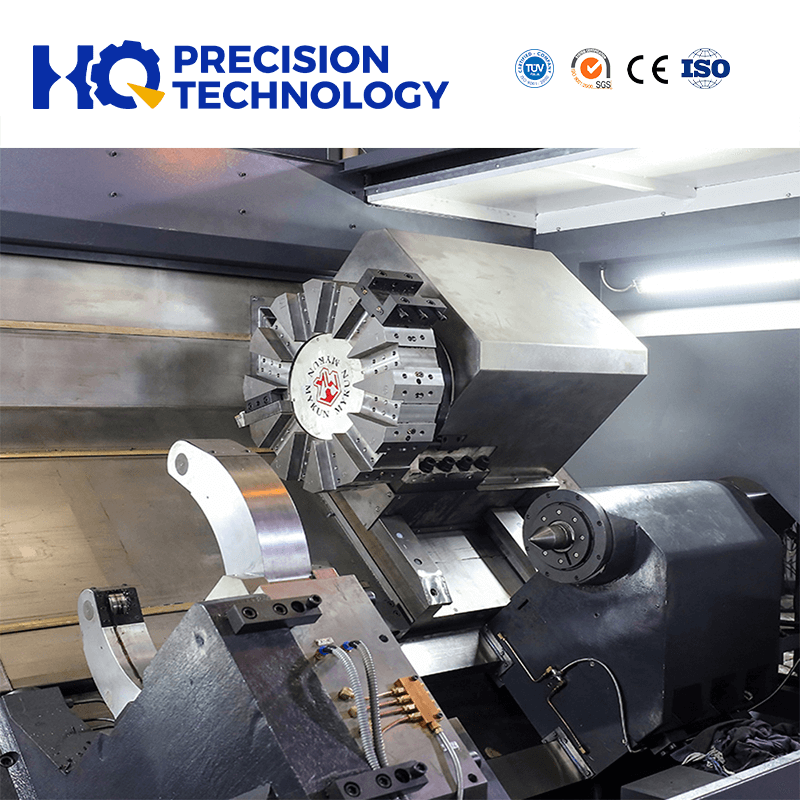
We must define what makes this equipment truly distinct from basic equipment. Combined machining integrates high-torque turning spindles alongside fully functional milling heads. Many premium models feature robust B-axis capabilities for complex angled surface generation. This differs entirely from merely bolting light-duty live tooling onto a traditional turret. A true CNC turning milling center removes heavy material just like a dedicated vertical mill. It provides massive spindle rigidity for aggressive cuts.
Modern machines synchronize the Y-axis and C-axis perfectly during complex toolpaths. Off-center milling, deep drilling, and rigid tapping become straightforward, automated operations. You no longer need to design or purchase complex, customized workholding fixtures. The turning spindle acts as a high-precision rotary indexing axis. This precise synchronization allows shops to machine complex flats and cross-holes effortlessly. It guarantees perfect angular relationships between features.
Processing the back side of a component traditionally requires manual operator flipping. A dual-spindle turn mill machine changes this manufacturing dynamic completely. It allows automatic, synchronized handoffs between the main and sub-spindle mid-cycle. The machine finishes the entire back of the part without human intervention. This automation guarantees perfect part-to-part consistency across large, demanding production runs. You completely remove human alignment errors from the equation.
Mistake: Assuming basic live tooling can replace a dedicated milling head for heavy material roughing operations.
Mistake: Ignoring strict spindle synchronization limits when purchasing entry-level, light-duty dual-spindle models.
Mistake: Failing to account for the physical tool clearance required inside the cabin during sub-spindle handoffs.
Best Practice: Always simulate toolpaths offline to verify physical clearances before running complex C-axis interpolation.
High-mix, low-to-medium volume shops usually see the fastest return on investment. This happens because single-setup machines drastically reduce ongoing, repetitive setup times. You can switch between completely different jobs in minutes rather than hours. However, a major caveat exists for ultra-high-volume manufacturing environments. For extremely simple parts, dedicated automation on standard lathes might still yield a lower cost-per-part. You must evaluate your dominant production style carefully before committing capital.
You must objectively assess your typical daily part designs and customer prints. Do they feature complex radial geometries, off-center holes, or deep milled flats? These specific geometric features force costly secondary operations on basic standard lathes. You need to categorize your workload to justify multi-tasking investments.
Part Complexity Evaluation Framework
Complexity Level | Typical Part Features | Ideal Machine Strategy |
|---|---|---|
Low | Simple continuous turning, axial drilling, no milled flats | Standard 2-axis lathe |
Medium | Basic cross-holes, simple hex flats, shallow tapping | Lathe featuring basic live tooling |
High | Off-center pockets, angled holes, synchronized back-work | Combined multi-tasking center |
Extreme | 5-axis simultaneous contours, complex medical implants | Full B-axis multi-tasking machine |
Raw material costs significantly impact overall shop profitability and cash flow. Calculate the direct financial impact of scrap reduction when machining expensive alloys. Materials like aerospace-grade Titanium, Inconel, and Hastelloy cost a fortune per pound. Scrapping a nearly finished Inconel part due to a secondary milling fixture error hurts deeply. Processing these exotic, tough alloys in a single setup protects your initial material investment. It maximizes yield and ensures predictable profitability.
Standard lathe CAM software packages remain completely insufficient for this advanced technology. You will experience catastrophic machine crashes using outdated or basic software tools. Combined equipment requires advanced CAM software capable of full kinematic machine simulation. Furthermore, you must secure proven, bug-free post-processors from day one. Do not attempt to manually edit G-code for synchronized dual-spindle handoff operations. The risk of causing expensive spindle collisions remains far too high.
We must address the harsh reality of modern operator training and recruitment. Running a multitasking machine requires a significantly higher caliber of setup machinist. This professional individual must deeply understand both turning and milling kinematics simultaneously. Finding personnel possessing this specific dual expertise proves difficult in today's labor market. You must budget for extensive, factory-certified training programs immediately upon installation. Expect a learning curve lasting several months rather than a few weeks.
Tighter internal work envelopes naturally increase the probability of physical tool collisions. You pack multiple turrets, bulky milling heads, and opposing spindles into a confined space. Spindle rebuilds on a 5-axis machine cost exponentially more than on basic equipment. Complex alignment calibrations also require specialized laser equipment and expensive factory technicians. You should proactively negotiate extended warranties and preventative maintenance packages during the initial purchase phase.
Purchasing the wrong configuration will trap your capital for many years. Follow these sequential evaluation steps to ensure proper equipment selection for your shop.
Audit Your Part Prints: Group your highest-margin, most frequently produced parts together. Analyze them thoroughly. Do they require heavy milling or just light radial drilling? This analysis dictates your exact spindle torque needs.
Determine Tooling Capacity: Assess standard turret capacity versus Automatic Tool Changer (ATC) requirements. Highly complex aerospace parts often demand 40 to 80 unique cutting tools. A standard 12-station turret will severely limit your capabilities here.
Verify Bar Feeder Compatibility: Evaluate your overall automation readiness carefully. Pairing a multi-tasking center with a premium bar feeder unlocks massive operational potential. This combination offers true lights-out manufacturing capabilities for unattended third-shift operations.
Demand Rigorous Time Studies: Never purchase industrial machinery based on glossy spec sheets alone. Require the OEM to run a comprehensive time study. Provide them with your most difficult, specific part print. Make them validate their cycle time claims using real cutting data.
Upgrading your equipment represents a fundamental, long-term shift in your manufacturing strategy. You transition permanently from outdated sequential operations to parallel, single-setup production. This evolution protects your profit margins on highly complex, tight-tolerance components. It eliminates unnecessary part handling and drastically reduces secondary fixture scrap.
We encourage decision-makers to evaluate their current multi-setup labor and scrap expenses carefully. Compare these ongoing daily financial drains directly against the cost of a combined machine. Base your final investment decision strictly on measured part complexity and realistic software readiness. Single-setup manufacturing secures your competitive edge in a demanding industrial landscape.
A: Live tooling on a traditional turret is meant purely for light-duty operations like basic drilling and tapping. A true turn-mill center features a dedicated, heavy-duty milling spindle. This robust spindle often incorporates full B-axis capability. It easily handles aggressive, heavy material removal rates matching a standalone vertical mill.
A: Yes, it typically requires a highly skilled, dedicated programming professional. Conversational programming at the machine control is rarely sufficient for optimal use. The extreme complexity of axis synchronization, sub-spindle handoffs, and tool collision avoidance demands offline programming. You must use advanced CAM software to drive these complex machines safely.
A: A multitasking machine certainly possesses a larger physical footprint than a single standard lathe. However, it generally saves 20 to 30 percent in overall facility floor space. You achieve this efficiency by eliminating the absolute need to house a lathe and a vertical machining center side-by-side.