
Views: 0 Author: Site Editor Publish Time: 2026-01-22 Origin: Site
When it comes to manufacturing and machining, choosing the right tools for the job is critical. For workshops involved in precision engineering, CNC lathes are essential machines that can significantly improve the efficiency, accuracy, and quality of production. However, with so many options available, selecting the right CNC lathe for your workshop can be a daunting task. This article will guide you through the factors you should consider when purchasing a CNC lathe, ensuring that you make an informed decision that fits your workshop’s needs.
At Shandong HQ Precision Technology Co., Ltd., we specialize in providing top-of-the-line CNC lathes and precision machinery designed to enhance your workshop’s productivity. Whether you’re looking to upgrade your existing equipment or invest in new machinery, understanding what to look for in a CNC lathe will help you choose the best option for your business. Let’s dive into the key factors to consider.
A CNC lathe (Computer Numerical Control lathe) is an automated machine tool used for shaping and machining parts, typically rotating the workpiece against a cutting tool. Unlike manual lathes, CNC lathes are controlled via a computer program that dictates the movements of the cutting tools. This ensures high precision, repeatability, and consistency during the manufacturing process.
CNC lathes are typically used for tasks such as turning, boring, drilling, and threading, all of which are commonly needed in industries such as aerospace, automotive, medical, and electronics. CNC technology allows workshops to create complex parts that require high tolerances with less manual effort, ultimately increasing efficiency and product quality.
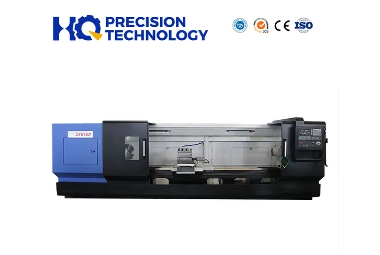
Selecting the right CNC lathe for your workshop depends on several factors, including your production volume, the types of materials you work with, and the complexity of the parts you manufacture. Below are the most important considerations when choosing a CNC lathe.
There are different types of CNC lathes, and each serves a unique purpose depending on the type of work you need to do. Here are the most common types of CNC lathes:
Horizontal CNC Lathe: This is the most commonly used CNC lathe and is ideal for high-precision, high-volume operations. It’s designed for machining larger parts and is often used in the automotive and aerospace industries.
Vertical CNC Lathe: Ideal for heavy-duty machining, vertical lathes are better suited for large, heavy parts. These are used in industries like construction and mining, where large metal components need to be machined.
CNC Swiss Lathe: These machines are designed for producing small, highly accurate parts. Swiss CNC lathes are commonly used in the medical device and electronics industries, where intricate, small parts are required.
Multi-Axis CNC Lathe: Multi-axis machines offer more complex machining capabilities, allowing for the simultaneous rotation of the workpiece along multiple axes. These lathes are ideal for creating complex shapes and parts with tight tolerances.
Another important factor is the size and capacity of the CNC lathe. The right size will depend on the type of materials you work with and the size of the parts you need to machine. CNC lathes come in a variety of sizes, from small tabletop models designed for precision parts to large machines designed for heavy-duty industrial use.
To determine the right size for your workshop, consider the following:
Max workpiece size: The size of the material you will be working with plays a major role in determining the lathe size. Larger parts require larger lathes with more space to accommodate the workpiece.
Max load capacity: Depending on the weight of the materials you plan to work with, the load capacity of the lathe may be important. If you are working with heavy metal components, make sure your CNC lathe can handle the required load.
Tooling capacity: If you plan to use multiple cutting tools during a single operation, choose a lathe with sufficient tool holders and tool-changing capabilities.
Precision is one of the primary reasons businesses invest in CNC lathes. These machines are known for their ability to produce parts with high precision and tight tolerances. Depending on your industry, the level of precision you need can vary greatly.
For industries like aerospace and medical, parts often require tight tolerances of just a few micrometers, and you need a CNC lathe that can deliver these high-precision results.
For automotive or general manufacturing, a lower level of precision might be acceptable, which means you may not need a high-end CNC lathe for such work.
Look for CNC lathes that can meet the required precision and tolerance specifications for your projects.
The speed of a CNC lathe is another important consideration, particularly if you are dealing with high-volume production. Fast cycle times ensure that parts are produced quickly, increasing productivity. The cutting speed, feed rate, and rapid traverse rate all play a role in how fast the machine operates.
If you have large production demands, opt for CNC lathes that offer higher cutting speeds and can process multiple operations without requiring much manual input.
The control system is the brain of the CNC lathe and directly impacts how easy it is to program and operate the machine. Look for CNC lathes with an intuitive, user-friendly interface. A user-friendly control system makes it easier for operators to set up, monitor, and troubleshoot the machine, reducing the likelihood of operator error.
Many CNC lathes now feature touchscreen interfaces and advanced software for controlling the machine, making it simpler to input designs, adjust settings, and automate operations.
Modern CNC lathes come with automation features that can greatly enhance productivity. These features include automatic tool changers, robotic arms, and loading/unloading systems. These automations allow for greater efficiency in machining, especially for high-volume operations, by minimizing human intervention and reducing downtime.
If your workshop requires continuous production and minimal human involvement, consider investing in a CNC lathe with automation capabilities to streamline your processes.
Choosing the right CNC lathe for your workshop is crucial for improving productivity, ensuring quality, and meeting the specific needs of your industry. Whether you need a machine for high-precision tasks, mass production, or custom work, understanding the key factors such as size, capacity, precision, and automation will help guide your decision.
At Shandong HQ Precision Technology Co., Ltd., we offer a wide range of CNC lathes that are designed to meet the needs of various industries, from aerospace to automotive and medical. Our CNC lathes are built for precision, efficiency, and durability, helping your workshop achieve optimal results with every project.
By investing in the right CNC lathe, you’ll enhance your manufacturing capabilities, reduce labor costs, and increase the overall efficiency of your production process. If you’re looking for high-quality CNC lathes, feel free to explore our range of products and get in touch with us for more information.
Q: What is the main difference between CNC lathes and manual lathes?
A: The key difference is that CNC lathes are computer-controlled, providing high precision and automation, while manual lathes require human input to control the machine settings.
Q: What industries typically use CNC lathes?
A: CNC lathes are widely used in industries such as aerospace, automotive, medical devices, electronics, and general manufacturing for high-precision parts.
Q: How do I maintain my CNC lathe for optimal performance?
A: Regular maintenance includes checking for wear and tear on parts, keeping the machine clean, ensuring proper lubrication, and performing software updates.
Q: Are CNC lathes suitable for both small and large production volumes?
A: Yes, CNC lathes are versatile and can be used for both low and high-volume production, depending on the machine’s capabilities and automation features.


