Views: 0 Author: Site Editor Publish Time: 2026-08-21 Origin: Site
Purchasing a new CNC turning machine represents a major capital expenditure for any manufacturing facility. Choosing the wrong bed geometry directly impacts cycle times. It also harms operator efficiency and damages your long-term profitability. Buyers researching this topic often face a difficult dilemma. You must weigh the lower initial cost of traditional flat beds against the higher production efficiency of slanted configurations. We provide a strictly objective, engineering-focused breakdown of both machine architectures. Our analysis details the structural differences affecting part precision and tool life. We also guide machine shops through a practical procurement decision framework. This structured approach ensures you match the equipment exactly to your floor requirements. You will learn how cutting dynamics interact directly with machine geometry. Read on to discover which architecture maximizes your specific production goals.
Architecture dictates efficiency: Slant bed configurations (typically 30°, 45°, or 60°) leverage gravity for superior chip evacuation and coolant flow, making them standard for continuous production.
Cost vs. Capability: A flat bed CNC machine offers a lower barrier to entry and handles heavy, large-diameter parts well, but suffers in high-volume automation.
Precision & Tool Life: The structural rigidity and thermal stability of a slant bed lathe yield tighter tolerances and extended tool life during heavy, continuous cutting.
The Bottom Line: Match the machine to the shop's operational model—flat beds for low-volume/heavy/custom work; slant beds for high-speed, automated turning centers.
Engineers design machine tool bases to handle immense cutting forces. The geometry of these castings defines how a machine performs under stress. You must understand these structural foundations before evaluating specific brands. We can separate turning machines into two primary geometric layouts.
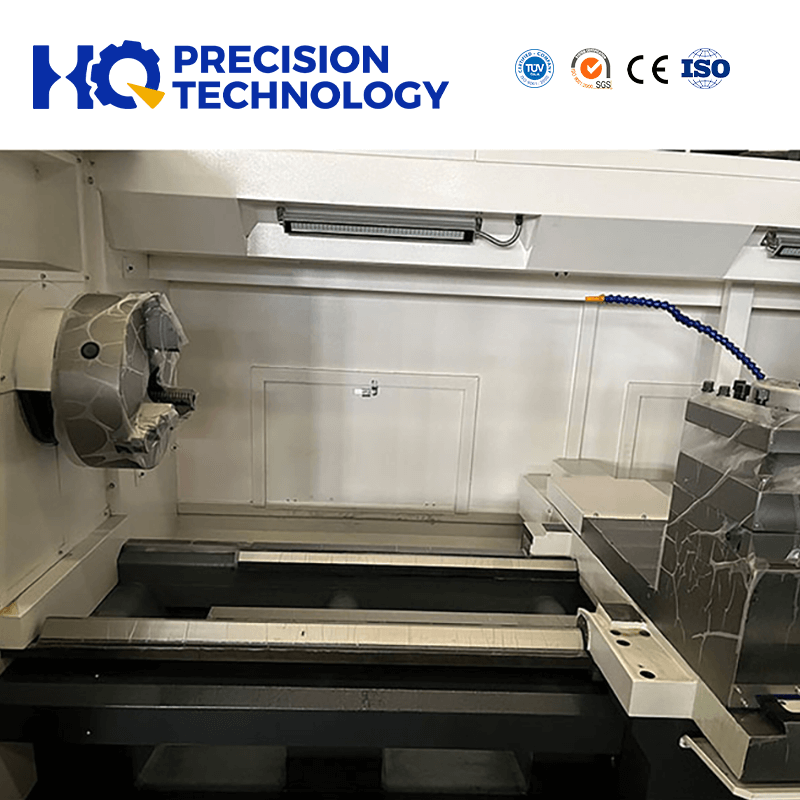
Traditional machine designs utilize a horizontal layout. The rails run completely parallel to the shop floor. This setup mirrors conventional manual machines closely. Operators find this layout highly familiar and approachable. During operations, cutting forces push directly downward. The energy travels straight into the horizontal casting. This robust structure handles incredibly heavy parts easily.
However, this horizontal orientation creates a major physical limitation. Chips naturally accumulate directly on the guideways. The horizontal surface traps metal shavings and cutting fluid. Operators must intervene frequently to clear debris. Shops often install steep coolant pans below the bed to help. Even so, chip build-up remains a constant battle during heavy material removal operations.
Modern manufacturing demands continuous operation without manual intervention. Engineers developed the slanted casting to solve horizontal layout limitations. Manufacturers position the linear rails on a steep incline. They typically use angles of 30, 45, or 60 degrees. A 45-degree angle generally offers the best balance of ergonomics and physics.
This design leverages basic physics to your advantage. The X-axis carriage moves along an angled plane. Gravity pulls metal chips downward instantly. Coolant flows away from the cutting zone naturally. The critical guideways remain clean and protected continuously.
Furthermore, force distribution improves significantly. The spindle and turret push cutting forces down and backward simultaneously. This energy transfers directly into the thickest, heaviest part of the iron casting. You experience drastically reduced vibration as a direct result.
Every shop floor operates differently. A flat bed CNC machine provides distinct advantages for specific manufacturing environments. You should align your equipment choices to your core business model.
These horizontal models require less complex casting processes. They cost less to manufacture overall. This translates directly to a lower purchase price for your shop. Startups and small operations often prefer this lower barrier to entry.
They also excel at high swing capacity applications. You can turn exceptionally long workpieces easily. They handle heavy, large-diameter components without clearance issues. The open horizontal layout provides maximum structural room. You will frequently see these machines turning massive drill pipes or large industrial flanges.
Setup remains straightforward for simple 2-axis work. Machinists transitioning from manual turning feel comfortable quickly. The familiar physical orientation shortens the learning curve dramatically. Operators can visually inspect the cutting process from a traditional angle.
You must account for severe heat management issues. Poor chip evacuation traps hot metal against the casting. This heat transfers directly into the machine bed. Thermal deformation occurs gradually over long production shifts. Your part tolerances will drift as the metal expands.
Operators also face ergonomic challenges. They must lean over the horizontal bed to reach the chuck. This extended reach causes physical strain during frequent part changeovers. Loading heavy components by hand becomes tiring and potentially hazardous.
We recommend horizontal designs for specific business models. Job shops focusing on low-volume production benefit greatly. High-mix environments requiring constant setup changes thrive here. Heavy industries like oil, gas, and mining utilize them effectively. They suit budget-conscious facilities perfectly. You avoid paying for automation features you do not actually need.
Production environments require maximum machine uptime. A slant bed lathe delivers the continuous performance required by modern supply chains. They dominate automated manufacturing facilities for several critical reasons.
Superior chip evacuation stands out as the primary benefit. Gravity prevents long stringy chips from bird-nesting around the chuck. You eliminate time-consuming machine pauses. Operators rarely need to open the doors to clear debris. High-pressure coolant washes the working envelope effortlessly.
The slanted cross-section creates a highly rigid structure. This triangular geometry offers superior torsional stiffness. Less machine vibration equals a superior surface finish on your parts. Your expensive cutting tools also last significantly longer. You avoid micro-chipping on the carbide inserts.
Thermal stability remains excellent during aggressive machining. Hot chips fall immediately into the automated conveyor below. Heat never transfers into the main machine casting. You maintain exact precision over long production shifts. You can hold tight aerospace tolerances hour after hour.
Ergonomics also improve drastically. The inclined carriage brings the spindle closer to the operator doors. Machinists experience less lower-back strain. They load heavy parts faster and safer.
These advanced structures require a higher upfront investment. The complex, single-piece castings cost more to engineer and pour. The intricate way-cover designs also add to the manufacturing expense.
They may also occupy a larger physical footprint. The angled design often pushes the machine deeper backward. You must measure your shop floor carefully before installation. Clearance behind the machine is necessary for maintenance access.
We see slanted architectures dominate highly competitive sectors. Tier 1 and Tier 2 automotive suppliers rely on them entirely. Aerospace manufacturers demand their superior thermal stability. Shops utilizing automated bar feeders consider them mandatory. They serve as the undisputed foundation for true lights-out manufacturing operations.
You must analyze multiple technical factors before finalizing a purchase. A comprehensive CNC lathe comparison requires looking beyond the basic specifications. We focus on rigidity, tooling flexibility, and space utilization.
Casting integrity determines your maximum material removal rate. Slanted models utilize a massive, single-piece cast iron base. This monolithic structure absorbs heavy cutting vibrations effortlessly. It handles aggressive feeds and speeds without complaining. Premium Meehanite cast iron dampens high-frequency chatter perfectly.
Conversely, traditional horizontal models often utilize a two-piece design. The bed bolts directly onto a separate base structure. This jointed assembly introduces potential vibration points. It cannot dampen heavy chatter as effectively as a single-piece casting. You must reduce cutting speeds slightly to maintain surface finish.
Advanced part geometries require complex tooling arrangements. A modern turning center easily incorporates live tooling and Y-axis milling capabilities. The inclined geometry provides ample clearance for large turrets. You can mount complex tool holders without collision risks. Sub-spindles integrate smoothly into this spacious layout. Parts transfer seamlessly from the main spindle to the sub-spindle.
Horizontal bases struggle to accommodate multi-axis configurations. The flat geometry creates tight clearance constraints. Live tooling turrets often collide with the tailstock or sheet metal enclosures. Engineers find it difficult to squeeze Y-axis mechanisms into horizontal layouts.
Facility square footage represents a premium asset. You must evaluate the machine footprint against expected hourly output. Slanted models might occupy more absolute floor space. However, their automation capabilities drastically increase parts per hour. You generate higher revenue per square foot of shop space. Horizontal models fit into tighter corners. Yet, their slower manual operation reduces overall spatial efficiency.
Evaluation Dimension | Horizontal Architecture | Slanted Architecture |
|---|---|---|
Base Casting Design | Often two-piece bolted assembly | Single-piece monolithic casting |
Vibration Dampening | Moderate, suitable for standard cuts | Excellent, ideal for aggressive feeds |
Turret Clearance | Prone to interference issues | Ample room for live tooling integration |
Automation Readiness | Low to moderate | Highly optimized for robotics |
Navigating the flat bed vs slant bed CNC lathe debate requires a clear decision framework. You should map your production requirements directly against machine capabilities. We created a targeted approach to help you decide.
We developed a logic matrix to simplify your shortlisting process. Follow these guidelines to narrow down your choices quickly:
Low Budget and Heavy Shafts: Shortlist horizontal models if you process large-diameter, heavy shafts primarily. They provide the necessary swing capacity economically.
Continuous Batch Production: Mandate a slanted structure if you run continuous batches exceeding 500 parts. You absolutely need gravity-assisted chip clearing and bar feeder integration.
Strict Tolerance Requirements: Mandate an inclined base if you require aerospace-grade tolerances across 8-hour shifts. Thermal control remains critical here. Hot chips must exit the envelope immediately.
Transitioning Workforce: Evaluate a compact horizontal or hybrid teach model if you are moving manual machinists to automated turning. The familiar layout builds operator confidence quickly.
Never purchase a machine tool based solely on brochure specifications. You should always request a comprehensive test cut. Submit your most difficult part print to the manufacturer. Ask them to perform a detailed time study. You need tangible proof of cycle times and surface finishes before finalizing any purchase order. Real-world cutting data always exposes the true capability of the machine geometry.
The choice between horizontal and inclined architectures depends strictly on your production scale. Follow these final takeaways to guide your investment strategy:
Horizontal bases remain indispensable for heavy, low-volume, and large-diameter custom work.
Slanted architectures serve as the undisputed backbone of modern, high-efficiency automated turning operations.
Prioritize thermal stability and chip evacuation if your batches run continuously.
Base your final decision on actual time studies rather than initial price tags alone.
Take action today by consulting a trusted machine tool expert. Submit a complex part print for a thorough cycle-time analysis. Schedule a live demonstration to witness the chip evacuation differences firsthand. A data-driven approach ensures your next machinery purchase drives maximum operational efficiency.
A: Yes, they achieve identical precision during short production runs. However, problems arise over a full shift. Poor chip evacuation causes heat buildup along the horizontal casting. This heat leads to thermal expansion and tolerance drift. Slanted bases naturally avoid this by dropping hot chips into a conveyor immediately.
A: No, they often require less mechanical maintenance. The enclosed casting is incredibly dense and heavy. Its slanted design naturally protects the linear guide ways and precision ball screws from metal chips and abrasive coolant. This geometric advantage extends the lifespan of critical motion components.
A: Slanted bases excel at automation. Their structural geometry seamlessly accommodates bar feeders, automatic parts catchers, and robotic loading arms. The angled layout prevents tooling interference during complex operations. They also eliminate manual chip-clearing bottlenecks, allowing true lights-out manufacturing without constant operator supervision.