Views: 0 Author: Site Editor Publish Time: 2026-11-18 Origin: Site
Acquiring capital equipment carries incredibly high stakes for any manufacturing facility. Selecting the right Horizontal Lathe directly impacts your shop floor throughput, part tolerance consistency, and long-term profitability. A misstep here can lead to bottlenecked production lines, frustrated operators, and costly unplanned downtime. Many shops struggle to translate brochure specifications into real-world production gains. This guide moves past basic definitions to tackle the real challenges of machine procurement. We provide a hard-nosed, decision-stage framework to help you evaluate horizontal lathes based on actual business outcomes and implementation realities. Whether you are a production manager, a manufacturing engineer, or a shop owner, you need actionable insights to evaluate shortlists effectively. By the end of this article, you will know exactly how to align machine specifications with your production goals. You will learn how to ask vendors the right questions and prepare confidently for procurement.
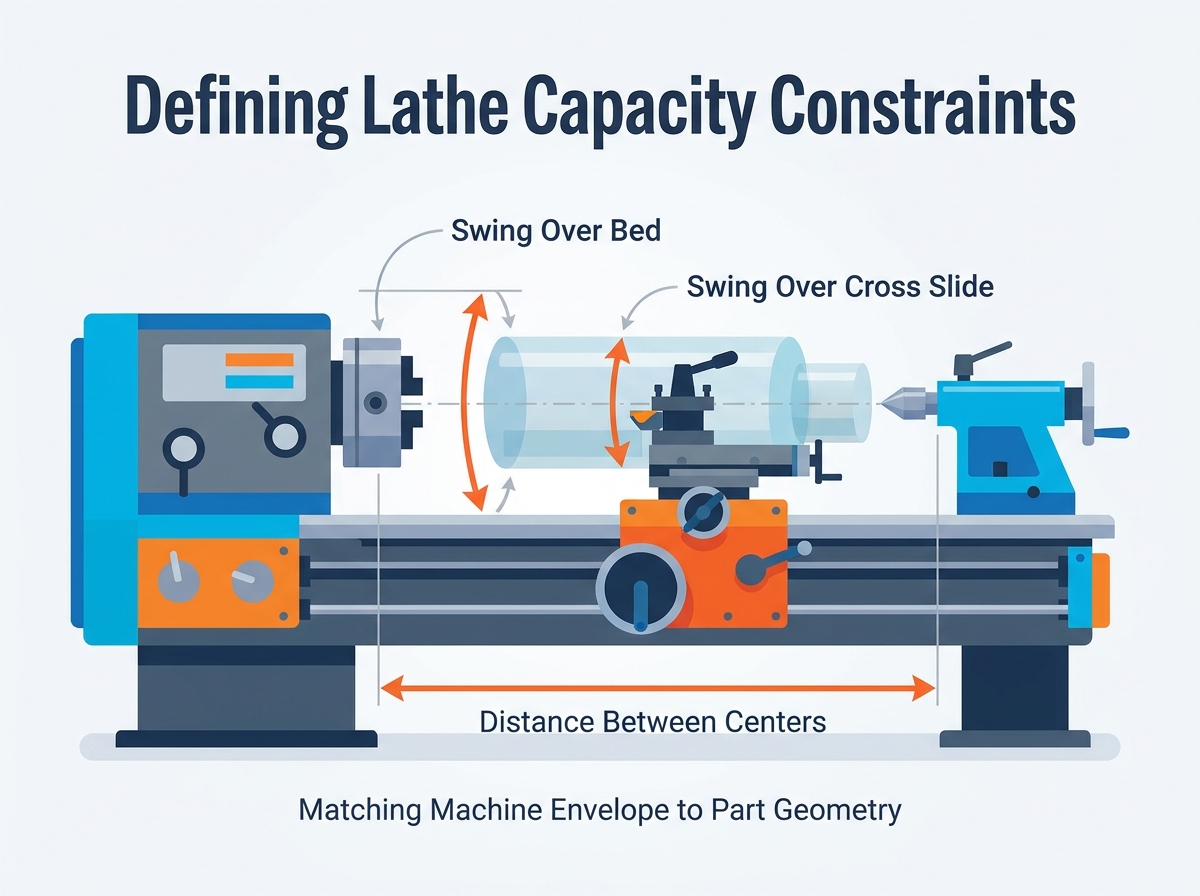
Application-Driven Sourcing: Sizing a horizontal lathe requires balancing "swing over bed" and "distance between centers" with your shop's standard material footprint.
Rigidity Equals Yield: Heavier, single-piece cast iron beds are non-negotiable for high-tolerance, heavy-cutting operations, despite higher upfront costs.
Vendor Support is a Feature: Service level agreements (SLAs) and domestic parts availability should weigh as heavily as spindle specifications in the final decision.
Purchasing a new machine tool should always solve a specific business problem. You must define this problem clearly before looking at equipment catalogs.
Start by identifying the specific bottlenecks driving your purchase. Are you spending too much capital on outsourced turning operations? Outsourcing eats into your profit margins and extends your lead times. Perhaps aging machines cause unacceptable scrap rates on the shop floor. Old equipment often struggles to hold tight tolerances, leading to wasted material and lost labor hours. You might also find yourself losing lucrative bids because you cannot handle long-shaft work. Pinpoint these exact pain points first. Documenting your current limitations helps you justify the capital expenditure to stakeholders.
You must choose the right machine orientation for your specific parts. A horizontal setup excels at machining longer, cylindrical parts like drive shafts, axles, and hydraulic cylinders. In this configuration, gravity helps clear chips away from the workpiece naturally. This prevents chip recutting and protects your surface finish. Conversely, vertical lathes work better for heavy, large-diameter, short parts. Gravity seats these massive parts securely into the chuck, reducing the clamping force required. If your product mix consists primarily of long, slender components, a horizontal configuration remains the optimal choice.
Define what makes this investment successful before you evaluate any brochures. Vague goals lead to poor purchasing decisions. Success might mean reducing cycle times by 20% on your highest-volume part family. It could mean achieving tighter tolerances on difficult aerospace alloys like Inconel or titanium. Alternatively, it might involve enabling lights-out manufacturing to boost your overnight production capacity. Set measurable, quantifiable goals to guide your evaluation process. Share these criteria with your machine tool distributor. They can recommend specific options tailored to your exact production targets.
Evaluating machine specifications requires a deep understanding of your daily production needs. You must look beyond the headline numbers.
You must calculate the maximum part diameter carefully. The swing over bed dictates the absolute maximum diameter the machine can physically rotate. However, the swing over the cross slide represents the true limiting factor for actual machining. The cross slide sits lower than the bed, reducing the usable clearance. Always leave a generous safety margin to avoid catastrophic tool collisions. Next, match the bed length to your maximum required part length. This metric is known as the distance between centers. Remember to factor in the physical space consumed by the chuck, the jaws, and the tailstock clearance. A 40-inch bed does not mean you can turn a 40-inch part. You might only have 30 inches of usable cutting length.
Spindle performance dictates your material removal rates. Evaluate spindle torque at low speeds if you remove heavy material like tool steel or cast iron. High torque prevents the spindle from stalling during aggressive, deep cuts. Look at the horsepower and torque curves provided by the manufacturer. If you primarily finish aluminum or brass, prioritize high RPM capabilities. High speeds help you achieve optimal surface finishes and reduce cycle times on softer materials. Additionally, assess the spindle bore size if you plan to use bar-fed operations. The drawtube bore must comfortably accommodate your largest standard bar stock diameter.
Machine weight matters immensely in metalworking. Heavier machines dampen cutting vibrations much better than lighter alternatives. This vibration damping leads to superior surface finishes and significantly longer tool life. You must also choose between box guideways and linear guideways. Box ways offer massive rigidity for heavy, interrupted cuts. Linear ways provide rapid traverse speeds for high-volume, light-duty production. Furthermore, single-piece cast iron construction ensures continuous precision. A unified casting resists thermal distortion much better than bolted assemblies. As the machine heats up during operation, a single-piece bed expands uniformly, maintaining your critical alignments.
Guideway Comparison Guide
Feature | Box Guideways | Linear Guideways |
|---|---|---|
Vibration Damping | Excellent (ideal for heavy cuts) | Moderate (better for light cuts) |
Traverse Speed | Slower (limits rapid movements) | Significantly Faster (reduces cycle time) |
Friction Levels | Higher (requires more lubrication) | Lower (highly efficient movement) |
Best Application | Hard metals, interrupted cuts | High-speed finishing, aluminum parts |
Standard turrets handle basic turning operations exceptionally well. However, live tooling transforms the machine entirely. Adding Y-axis capabilities allows for one-setup milling and turning. This drastically reduces part handling time and eliminates secondary operations on a separate mill. Evaluate tool change times and turret indexing mechanisms carefully. Servo-driven turrets index faster and more reliably than older hydraulic designs. Consider the tooling interface as well. Base Mounted Turret (BMT) tooling offers superior rigidity for heavy milling compared to traditional VDI setups.
The control system and automation features dictate how easily your team can operate the new equipment.
Manual horizontal lathes still hold value for low-volume repair work or quick prototyping. They require less setup time for simple, one-off parts. A skilled machinist can turn a basic shaft manually before a CNC programmer even finishes writing the code. However, CNC is absolutely mandatory for scalable, repeatable production. CNC ensures perfect repeatability across thousands of parts. It reduces operator fatigue and handles complex geometries effortlessly. If you plan to grow your business, investing in CNC technology is non-negotiable.
Evaluate Fanuc, Siemens, or proprietary controls carefully. Base your choice heavily on existing shop floor familiarity. Introducing a completely new control brand steepens the operator learning curve significantly. Sticking to a familiar ecosystem minimizes training time and reduces costly programming errors. If your shop already runs Fanuc controls, buying another Fanuc-controlled machine makes logical sense. Operators can share programs and troubleshoot issues much faster. Some modern controls also offer conversational programming. This feature allows operators to program simple parts directly at the machine without knowing complex G-code.
Assess the machine's compatibility with automation systems. Can it easily integrate with bar feeders or parts catchers? Does the control architecture support robotic loading systems or gantry loaders? Planning for future scalability prevents your new machine from becoming an isolated bottleneck. Even if you do not buy a bar feeder today, ensure the machine comes pre-wired for one. Adding automation later becomes much cheaper and easier if the machine already has the necessary interfaces installed.
Buying the machine is only the first step. Installing it and getting it running presents a completely different set of challenges.
Do not overlook hidden installation hurdles. High-mass machines often require specialized concrete foundations to maintain leveling and precision. A standard six-inch shop floor might crack under the weight of a heavy-duty turning center. You may need to core drill and pour a dedicated isolation pad. You must also account for rigging expenses. Professional riggers charge significant fees to move heavy equipment safely. Furthermore, check your electrical capacity. Many industrial machines require phase-3 electrical upgrades or dedicated transformers. Verify your shop's infrastructure thoroughly before signing the purchase order.
Acknowledge the industry-wide skills gap. Modern CNC machines require skilled programmers and operators to run efficiently. Factor in the necessity of vendor-supplied training. Proper training ensures your team can utilize advanced features safely. Do not expect your operators to figure out a new multi-axis machine on their own. Invest in formal training sessions. Many vendors offer simulator training or digital twin software. This allows your programmers to practice offline without risking a crash on the actual machine.
Evaluate the coolant management systems thoroughly. High-pressure coolant is essential for deep hole drilling and effective chip breaking. Choose your chip conveyor configuration based on your primary material. Hinge conveyors work exceptionally well for stringy steel chips. Magnetic conveyors suit cast iron applications perfectly, as they catch fine ferrous dust. Establish strict preventative maintenance schedules immediately. Regularly check way lube levels, clean coolant filters, and monitor spindle temperatures. Proactive maintenance protects your investment and prevents catastrophic failures.
Choosing the right vendor is just as important as choosing the right machine specifications.
Never rely solely on generalized brochure metrics. Marketing materials often highlight best-case scenarios. Instead, request test cuts on your specific parts. This process is known as a time study. Provide the vendor with a blueprint and a block of your actual material. A custom time study proves the machine's actual cycle time and rigidity under your exact cutting conditions. It also demonstrates the vendor's applications engineering capabilities. If a vendor refuses to perform a time study, consider that a major red flag.
Ask hard questions about domestic replacement part inventory. Overseas shipping delays can cripple your production schedule if a critical component fails. You need a vendor who stocks common wear parts locally. Evaluate warranty structures carefully. Understand whether the warranty covers spindle hours or calendar months. Read the fine print regarding what constitutes operator error. Demand guaranteed service technician response times in writing. A machine is useless if you have to wait three weeks for a repair technician to arrive.
Structure the purchase based on projected machine utilization rates. Compare leasing versus buying options carefully. Leasing can preserve your working capital and offer attractive tax advantages. Buying the machine outright builds equity on your balance sheet. Calculate your Return on Investment (ROI) meticulously. Factor in cycle time reductions, lower scrap rates, and new bidding capabilities. A more expensive machine might offer a faster ROI if it eliminates secondary milling operations. Work with your accountant to understand depreciation benefits like Section 179 tax deductions.
Buying a Horizontal Lathe represents a long-term partnership with the machine builder. It is never just a simple transactional purchase. The right equipment will elevate your shop's capabilities for decades. To move forward effectively, finalize your maximum part dimensions today. Audit your facility's power and floor capacity to avoid installation surprises. Next, issue a Request for Quote (RFQ) requiring a custom time study from your shortlisted vendors. Demand proof of performance before you commit capital. This proactive, data-driven approach ensures you select a machine that genuinely transforms your manufacturing operations and boosts your bottom line.
A: Supply chain realities heavily influence lead times. Standard, base-model machines might be in-stock and ready to ship within a few weeks. However, custom builds, multi-axis configurations, or highly automated cells typically require anywhere from three to six months for delivery and installation.
A: Yes, modern turning centers often feature live tooling, C-axis, and Y-axis capabilities. These advanced additions transform a standard lathe into a multi-tasking machine. They allow you to mill flats, drill off-center holes, and tap threads in a single setup.
A: Structural rigidity, diligent maintenance, and operating hours dictate lifespan. A well-maintained cast iron machine easily provides a 10 to 20-year useful life mechanically. However, control electronics and servo drives may require retrofitting or upgrading sooner to maintain peak processing efficiency.
A: Slant beds offer superior chip evacuation and better ergonomics for operators, making them ideal for high-volume CNC production. Flat beds are typically reserved for manual operations or heavy-duty applications requiring massive swing capacities for oversized parts.