
Views: 0 Author: Site Editor Publish Time: 2026-01-15 Origin: Site
In the world of manufacturing, precision and efficiency are the key drivers behind production success. To achieve these goals, industries around the globe rely on advanced machinery, and one such essential tool is the CNC lathe. The CNC (Computer Numerical Control) lathe has revolutionized the way parts are produced, providing manufacturers with the ability to create highly accurate and complex components at scale. But what exactly is a CNC lathe used for, and what are its common applications in various industries?
A CNC lathe is a machine used for shaping materials such as metal, plastic, or wood. Unlike traditional lathes that require manual control and operation, CNC lathes are automated and computer-controlled, allowing for precise and repeatable production processes. These machines can rotate the workpiece against a cutting tool to remove material, allowing for the creation of cylindrical, conical, and other complex shapes. They are highly versatile and can be used for a wide range of applications across different industries.
At Shandong HQ Precision Technology Co., Ltd., we specialize in providing high-quality CNC machines, including CNC lathes, that help businesses enhance their manufacturing processes. In this article, we will explore the various uses of CNC lathes, their applications in different sectors, and how they contribute to achieving high-precision, efficient production.
A CNC lathe is an advanced machine tool that is used to machine or shape materials with a rotating workpiece. Unlike manual lathes, which require human operation for positioning and cutting, a CNC lathe is controlled by a computer that processes pre-programmed instructions, providing automated, precise cutting, turning, and shaping of the material. The machine is typically used to cut materials into cylindrical or conical shapes, but it can also perform more complex operations such as threading, drilling, and grooving.
CNC lathes have become essential in industries that require high levels of precision and repeatability. The use of computer controls allows manufacturers to produce parts with tight tolerances and minimal variation, resulting in a more efficient and cost-effective production process.
Before we delve into the common applications, let's first understand the key features that make CNC lathes so powerful:
Computerized Control: The CNC lathe is controlled by a computer program that dictates the movements of the cutting tools and the workpiece. The program allows for high-precision machining, reducing the risk of human error and increasing repeatability.
Multi-Axis Capability: CNC lathes are capable of multi-axis machining, which allows them to make intricate cuts and shapes that would be difficult or impossible to achieve with a traditional lathe. This feature is especially useful for producing complex components that require multiple cutting operations.
Automatic Tool Changing: CNC lathes often come with automatic tool changers that can switch between different tools during the machining process. This feature increases productivity and allows for the efficient completion of multi-step operations without the need for manual intervention.
High-Speed Precision: CNC lathes are capable of working at high speeds while maintaining high precision. This makes them ideal for mass production of parts where consistency and efficiency are paramount.
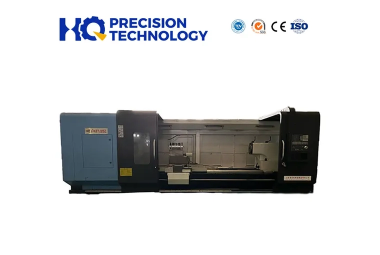
CNC lathes are used across a variety of industries, each requiring different capabilities and precision levels. Below are some of the most common applications:
The aerospace industry is one of the primary sectors that relies heavily on CNC lathes for the production of parts. Aerospace components, such as turbine blades, aircraft engine components, and landing gear parts, require extremely high precision and the ability to withstand extreme conditions. CNC lathes are used to produce these components with tight tolerances, ensuring that they perform optimally in critical applications.
For example, CNC lathes are used to machine titanium and aluminum components used in aircraft and spacecraft. These materials are known for their strength and lightness, but they are also challenging to work with. CNC lathes are capable of providing the necessary cutting power and precision to handle these tough materials.
The automotive industry also benefits greatly from CNC lathes. These machines are used to produce a wide range of components, including engine parts, transmission shafts, brake components, and custom parts. High-precision machining is essential in the automotive industry, as even small deviations can lead to performance issues or safety concerns.
For example, CNC lathes are used to create components like crankshafts, cylinder heads, and brake rotors, all of which require high accuracy and the ability to withstand heavy use over time. CNC lathes also allow for rapid prototyping, enabling car manufacturers to quickly test and refine new designs.
In the medical industry, precision is crucial, and CNC lathes play a significant role in manufacturing medical devices and implants. Parts such as prosthetic limbs, surgical instruments, and dental implants require high-precision machining to ensure they function properly and safely.
CNC lathes are used to machine materials like titanium and stainless steel, which are commonly used for medical implants due to their biocompatibility and strength. The ability of CNC lathes to produce complex shapes with high accuracy is crucial for producing parts that fit perfectly and function effectively within the human body.
The consumer electronics industry relies on CNC lathes to produce components for products like smartphones, tablets, and computers. These components include parts like housing shells, connectors, and screw threads, all of which require precision machining to ensure proper assembly and functionality.
CNC lathes are used to create small, intricate components that meet the stringent requirements of the consumer electronics industry. The ability to machine small parts with high precision ensures that these products function correctly and have a long lifespan.
In the energy sector, CNC lathes are used to produce components for power plants, wind turbines, and oil and gas drilling equipment. These industries require robust and reliable parts that can withstand extreme pressure and wear.
For example, CNC lathes are used to manufacture turbine blades for power plants, valves and fittings for oil and gas pipelines, and wind turbine hubs. The ability to produce these components with high accuracy and durability is essential for ensuring that energy production equipment operates efficiently and safely.
The woodworking industry also uses CNC lathes for a variety of applications. These machines are used to carve, shape, and finish wood products with high precision. From furniture legs to decorative molding, CNC lathes help manufacturers create intricate designs that would be difficult to achieve manually.
For custom furniture makers, CNC lathes are essential for creating unique pieces with precise dimensions and smooth finishes. Additionally, CNC lathes can help speed up production times while maintaining high-quality craftsmanship.
In conclusion, CNC lathes are indispensable tools in modern manufacturing, offering precision, speed, and versatility across a wide range of industries. Whether it’s for aerospace, automotive, medical, energy, or woodworking, these machines enable businesses to produce high-quality components with tight tolerances, which are essential for the success of their operations. With their automated systems and advanced features, CNC lathes have revolutionized the way parts are produced, driving improvements in efficiency, safety, and cost-effectiveness.
At Shandong HQ Precision Technology Co., Ltd., we provide CNC lathes and other precision machinery that help businesses streamline their manufacturing processes. Our high-performance machines are designed to meet the needs of industries that require precise and reliable equipment for their production lines.
Q: What is the difference between a CNC lathe and a manual lathe?
A: A CNC lathe is controlled by a computer, allowing for precise, automated operations. In contrast, a manual lathe requires human intervention to control the cutting tool and workpiece.
Q: What materials can be machined using a CNC lathe?
A: CNC lathes can machine a wide variety of materials, including metals like steel, aluminum, and titanium, as well as plastics, wood, and composites.
Q: Can a CNC lathe perform other functions besides turning?
A: Yes, CNC lathes can also perform other operations like drilling, milling, and threading, depending on the machine's configuration and tooling.
Q: How do I choose the right CNC lathe for my business?
A: Consider factors like the materials you’ll be machining, the size and complexity of the parts, your production volume, and the machine's features, such as multi-axis capability and tool-changing automation.


